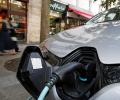
Automobile manufacturers, new and old, as well as ancillary suppliers are set to spend a combined Rs 70,630 crore over the next five years on either entering the electric vehicle segment or stepping up their presence in it. Data culled from announcements made by firms shows India, the world's fifth largest automobile market, is poised to receive one of the biggest capex pushes ever to fuel the transition from internal combustion engines to electric motors and batteries as part of a green drive. The EV push, egged on by the government's emphasis on electric mobility to meet its net zero targets, is expected to yield at least 25 electric vehicles - new ones as well as electrified versions of existing vehicles running on internal combustion engines.

The firm, which showcased an electric variant of its Duet scooter at the 2016 Auto Expo, is working on two models at its Jaipur R&D centre.
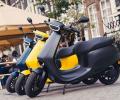
Ola Electric is moving the delivery for the first batch of its electric scooters to between December 15 to the end of the month, a two- to four-week delay from its earlier schedule, due to a shortage of chipsets and electronic parts. The first batch of deliveries were scheduled for November 30 but the company decided to delay them after a meeting between its factory team and the global supply chain on Saturday. It became clear that the late delivery of chips and electronic parts was only 'getting worse', sources told Business Standard. Ola has apologised to customers for the delay and said it is "ramping up production as fast as we can so that you can get your Ola S1 at the earliest". It has stopped taking any new bookings until the chip shortage has eased, say sources.

As a 75-year-old septuagenarian, Bajaj Auto has adapted itself as a nod to competition, regulations, and changing buyer preference. It will continue to do so, said its managing director Rajiv Bajaj at the launch of the all-new Pulsar 250. This was in response to a question on the company's preparedness for disruption by electric two-wheeler start-ups.
Electric two-wheelers have zipped past the half-a-million registration mark and achieved a market penetration of 4 per cent at the fag end of Calendar 2022, according to data released by VAHAN. According to VAHAN data for the year (until December 27), 560,000 two-wheelers were registered in the country, up a staggering fourfold over 2021, when only 136,000 were registered, and when electric vehicle penetration was a mere 1.05 per cent. The total number of two-wheelers (internal combustion engine, or ICE, and electric) registered so far in 2022 stands at 14.5 million, up only 12.7 per cent over the previous calendar year.

China's covid crisis could provoke a raw material crunch for India's EV industry later this year.

US hedge fund Tiger Global and Japanese investment giant SoftBank have trimmed their investments in Indian start-ups by over a third - from $3.8 billion in the second half of 2021 to a mere $1.08 billion in H1 2022, according to data from Venture Intelligence. While SoftBank's investments in India dropped from $1.9 billion in H2 2021 by more than a fifth to only $0.33 billion in H1 2022, that of Tiger Global fell from $1.92 to $0.74 billion in the same period. Private equity (PE) fund trackers point out that this year most of the deals that Tiger Global has invested in are in the early stage (up to series D), and only a few are in the series E and above.

Besides electric vehicles, some start-ups present are working in the area of bike customisation, motorsports, auto gaming arena, autonomous vehicle and so on

Known for its phones and emerging from nowhere in the segment, it might take on the scooter Goliaths.

In doing so, Bajaj has become the first internal combustion engine two-wheeler company to launch an all-electric two-wheeler in India.

Bansal has picked up a majority stake in Chaitanya Rural Intermediation Development Services, a company which runs microfinance institution Chaitanya India Fin Credit.
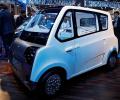
An EV has to be purchased along with the battery as there are hardly any battery swapping, rental, or leasing business models available across India.

Tamil Nadu has cornered around 18.63 per cent of the fresh investments in Q1FY21 and topped the list of state-wise investments. These investments should help create over 67,212 jobs.
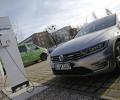
Eyes investments of Rs 31,000 cr in research and manufacturing of electric vehicles
The new scheme may link the incentives to the battery power - higher the power, higher the incentive and most electric two-wheelers running on Indian roads use low power and fast charging batteries.
The soaring prices of metals like lithium, nickel and cobalt, which are the primary constituents of the cell, as well as supply chain bottlenecks, are also pushing up the cost of batteries
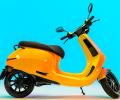
The entry of SoftBank-backed Ola into the electric scooter (e-scooter) segment is set to power up the overall market and perhaps fast-track the adoption of battery-operated vehicles. But for manufacturers of internal combustion engine (ICE)-powered two-wheelers, such as Bajaj Auto, Hero MotoCorp, and TVS Motor, it will be a double whammy. Not only will they have to contend with the aggressive pricing of Ola's scooter and incur a loss at each unit of the e-scooter sold, the volumes of their regular (ICE) models, too, could feel the squeeze, observed analysts. Ola is expected to price its e-scooter in the range of Rs 85,000-1.1 lakh.

Though startups find 17 mentions in the Budget speech of the finance minister, and have been promised tax exemptions, the reality is that only 2 per cent of the 4,648 applications received from startups for income tax exemption had been approved as of February 2019, according to an answer to a Parliament question. As India's startup space bubbles with activity - new, young players are tapping into opportunities opening up - there are local anti-portfolio stories circulating about investors missing opportunities in 'unicorns', or companies that have reached valuation of $ 1 billion, says Vandana Gombar.

In a boost to the electric vehicle boom in India, Taiwanese major Hon Hai Technology Group (aka Foxconn) is likely to set up an EV manufacturing unit in India through its subsidiary Foxtron. Amid speculation that the company may look at Tamil Nadu and probably the Ford India unit near Chennai for its new facility, sources indicate that the group was already betting big in the electric vehicle component space in India through Bharat FIH, which is already having a tie up with companies like Ola Electric and Ather. Bharat FIH currently has two manufacturing units in Tamil Nadu's Sriperumbudur that manufactures phones like Apple iPhones and Xiaomi phones.

There's little interest in seed funding now as investors are finding it a risky proposition.

Even as India goes green, lack of uniform standards for setting up charging stations is holding back companies. Alnoor Peermohamed reports.

Recently, world headlines buzzed with Elon Musk's announcement that he was shelving his audacious bid for social media platform Twitter. Away from the media spotlight, questions are being asked about the maverick billionaire's plans in India, too. A few days ago, a Reuters report said Musk's flagship Tesla had put on hold its plan to launch electric cars in India.

What will it take for Tesla to plug and play in India? Sector pundits say it's a mix of strategy, getting the price right, timing, the right talent, and above all, patience.

At the pre-Budget meeting at Niti Aayog, Modi called for a focussed effort from all stakeholders in order to achieve the target of $5 trillion economy. The participants urged the government to focus on credit expansion, exports growth, governance of PSBs, increasing consumption and job creation.
With regard to his investment in Ola, Bansal said that on the one hand, the ride-hailing major had emerged as a global force in the mobility space and on the other it continued to build deeper for various needs of a billion Indians through its platform. This is the largest funding by an individual in the app cab.

Meet the new class of Forbes India 30 Under 30.

Omkeshwar Singh, Head, Rank MF, a mutual fund investment platform, answers your queries.
